
FarmVille 2: Tropic Escape
ZyngaSimulation
4.031.58K Reviews
- Version
- 1.225.148
- Installs
- 10.00M
- Age Rating
- Everyone
Screenshots
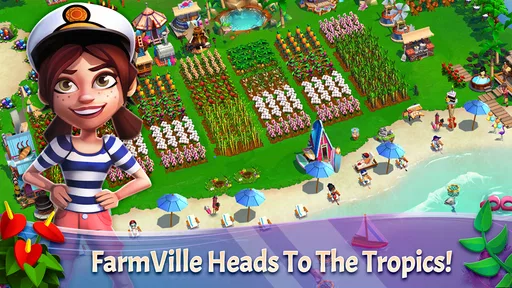

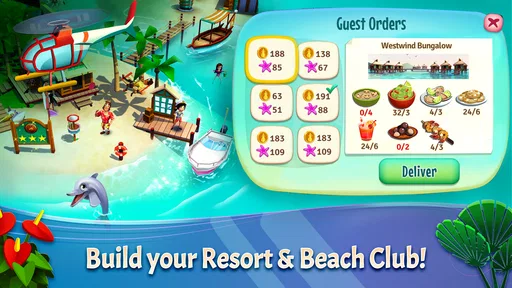
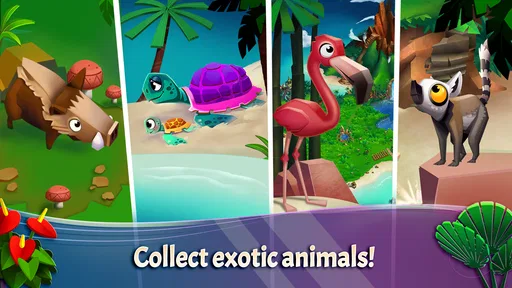

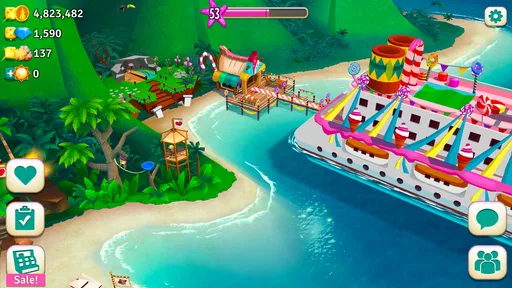
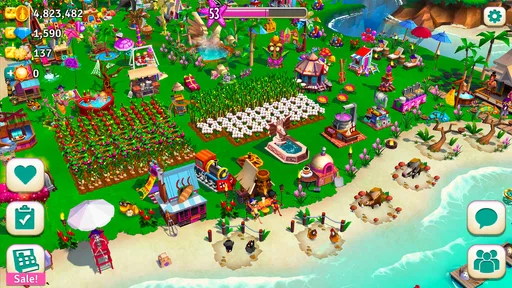
Our Review of FarmVille 2: Tropic Escape
 Analysis by Appyee
I found FarmVille 2: Tropic Escape most enjoyable when I treated it as a relaxed island routine rather than a game I needed to rush through. It is a free simulation game from Zynga that combines farming, crafting, exploration and light story progression in a bright tropical setting. The central appeal is simple: grow useful materials, turn them into better goods, expand what the island can offer and gradually uncover more of its story.
That sounds familiar if you have played other farming games, but the island theme gives this one a different rhythm. Instead of building a traditional countryside farm, I spent my time balancing crops, tropical resources, animals and production stations across a compact vacation-like environment. The result is pleasant and easy to understand, although the free-to-play structure becomes more noticeable the longer I played. My overall view is positive for patient players who enjoy short, repeatable sessions, but I would not recommend it to anyone looking for a fast, competitive or completely uninterrupted experience.
How the island loop works in everyday play
I found the island loop easiest to enjoy when I used each visit to prepare for the next one, rather than trying to clear every task at once. Keeping a little flexibility in my plans helped when an order or story goal called for materials I had expected to use elsewhere. That habit also makes it easier to judge whether this gentle routine suits you better than a more hands-on farming game.
A gentle start that teaches the important habits
The opening experience is designed to make the basic cycle feel approachable. I learned to collect available materials, plant or produce what the island needed, wait for those tasks to finish and use the results in new orders or improvements. The tropical presentation makes these chores feel less like a spreadsheet and more like maintaining a small holiday destination.
What matters is learning to think one step ahead. If I used every available ingredient on the first order I saw, I could soon be waiting for the next harvest or production cycle. A better habit was to keep a small reserve of common materials and begin longer tasks before leaving the game. That simple change made returning later feel productive instead of forcing me to rebuild my plans from zero.
The game works especially well in short visits. I could open it while waiting for an appointment, collect finished goods, start a few new activities and leave again. It does not require a long uninterrupted sitting to make progress, which is one of its strongest practical advantages. At the same time, players who prefer a single substantial session may find the waiting between tasks less satisfying.
Production planning is more important than decoration
The island is attractive, but the most interesting decisions are economic rather than visual. Space, materials and time all influence what I should do next. A tempting order may offer useful progress, yet completing it can consume an ingredient needed for a more valuable chain later. I began checking upcoming needs before collecting everything, especially when several recipes depended on the same basic resource.
One useful approach is to separate tasks into three groups: items needed immediately, items that take longer to create and items that are merely convenient. I handled the long jobs first when I knew I would be away from the game, then used shorter jobs during active play. This made the island feel more efficient without turning it into a stressful optimization exercise.
That balance is a meaningful strength. The game gives planning-minded players something to think about, but it does not bury the first hours under complicated controls. I could play casually and still improve my routine over time. The trade-off is that progress can feel slower if I ignore the production chain and simply tap whatever is ready.
The tropical setting gives familiar farming ideas a fresh mood
Many farming simulations rely on the same broad pattern of planting, collecting and upgrading. Here, the island setting changes the emotional tone. The scenery, exotic animals and story-focused presentation make the work feel like restoring and developing a destination rather than managing a conventional rural property.
I also liked that the setting supports different kinds of goals. One moment I was focused on a practical shortage, and the next I was interested in seeing what part of the island or story would become available. That variety helps prevent the first few sessions from feeling like a single repeated chore.
Still, the tropical theme cannot remove the underlying repetition. Once the novelty settles, the game depends on whether you enjoy checking production cycles and fulfilling requests. If you need constant mechanical variety, this may begin to feel routine sooner than a more action-oriented simulation.
Story and discovery give the routine a reason
The island story is important because it gives the daily tasks context. I generally prefer a farming game with some sense of direction, and the narrative element helped me decide what to work toward instead of treating every order as an isolated transaction. It is not the reason I would play this alone, but it adds motivation to the gathering and upgrading loop.
My advice is not to race through the story objectives. I got more value from treating them as milestones while maintaining a sensible supply of materials. Chasing a single objective too aggressively can leave the rest of the island underprepared, creating unnecessary waiting. A steady balance between story progress and stock management feels smoother.
This is also where the game suits casual players better than completionists. The story can guide your attention, but the broader routine still asks for patience. Players who want to finish every objective as quickly as possible may become frustrated by production timers and the need to gather supplies repeatedly.
Animals are more than decoration in the overall appeal
The exotic animals are one of the most memorable parts of the presentation. They make the island feel alive and reinforce the escape-like atmosphere. For me, they also softened the more repetitive parts of resource management. Returning to see a lively tropical environment is more inviting than returning to a bare menu of unfinished tasks.
However, I would not choose the game solely for its animals. Their charm works best as part of the wider setting, alongside the farm activities and island story. If your main interest is deep animal care or a detailed wildlife simulation, this is not the right expectation to bring to it. The animals support the broader progression loop rather than replacing it.
What the audience response suggests
The game has reached more than ten million installs, and its average rating is 4.0 from around 409 thousand ratings. I see that as a sign of broad accessibility rather than proof that every player will enjoy the same parts. The audience size makes sense: the controls are approachable, the setting is cheerful and the basic goals are easy to understand.
There are also around 32 thousand written reviews, which reflects a substantial amount of player discussion around the experience. I would interpret that popularity carefully. A game can be widely used because it is easy to pick up while still frustrating players who dislike waiting or spending pressure. In my experience, both sides of that reaction are understandable here.
The biggest weakness is the pace of free progression
The main limitation is not the farming concept itself; it is the friction that appears when several activities depend on time and limited supplies. Early progress feels generous enough to establish the island, but later routines demand more planning. When I wanted to complete several goals in one sitting, I sometimes reached a point where the sensible option was simply to wait.
That pacing is acceptable if the game is part of a daily routine. It becomes much less appealing if you expect continuous progress every time you open it. The difference between those two play styles is crucial. A patient player sees timers as a reason to return later, while an impatient player sees them as a barrier between decisions.
In-app purchases add another layer to that issue. The listed purchase range runs from $0.99 to $199.99 per item, so the game can offer very small optional purchases as well as much larger ones. I would be careful with that range, particularly on a shared device or for younger players. The game is free to download, but “free” does not mean every faster route through the island is free.
My practical recommendation is to decide on a spending rule before playing. I found the experience easier to enjoy when I viewed purchases as optional and planned around the normal pace. If you know that delayed progress will tempt you into spending, this may not be a comfortable choice. A game with a fixed upfront price or fewer purchase prompts may suit you better.
Who should play it, and who should skip it
I would recommend it to someone who likes calm management games, colorful settings and progress that can be checked several times throughout the day. It is a good fit for a player who enjoys preparing a production queue in the morning, checking completed work later and making a few decisions before bed. The island theme also makes it more inviting than a purely numerical farming simulator.
For example, I can imagine playing it during a normal weekday: before work, I would start the longer tasks; during a break, I would collect finished items and handle a quick order; in the evening, I would use the accumulated materials to move a story goal forward. That pattern turns the waiting into part of the routine rather than a problem. It is a small but realistic use case, and it shows where the design fits best.
I would be more cautious about recommending it to children without an adult setting clear purchase boundaries. The content rating is Everyone, which makes the presentation broadly accessible, but the presence of in-app purchases still matters in a family context. The safest approach is to treat the spending controls on the device as seriously as the age rating.
Players seeking action, multiplayer competition, deep construction freedom or a completely offline-style experience should probably look elsewhere. This is not built around quick reflexes or dramatic moment-to-moment change. It is also not ideal for someone who dislikes repeating collection tasks. A more traditional premium simulation may be better if you want uninterrupted access to systems without purchase-related pressure.
Device and version considerations
The game supports Android 7.0 and later, which keeps it available to a wide range of compatible devices. Its current version is 1.225.148. I would still keep the app updated through the normal store process, since live-service-style games can feel less reliable when an older build is used. On a device with limited storage or an inconsistent connection, I would also leave room for routine updates and avoid starting a long session when I cannot stay connected.
I would not judge the game only by its first ten minutes. The early section is intentionally welcoming, while the more important question is whether the repeating island routine fits your patience. Before spending anything, I suggest playing long enough to experience the normal cycle of collecting, producing, waiting and returning. That will tell you more about compatibility than the tropical artwork alone.
My final view after settling into the routine
FarmVille 2: Tropic Escape succeeds because it makes familiar farming mechanics feel like a relaxed island project. The story gives direction, the exotic animals add personality and the production system rewards players who plan ahead. I especially liked how well it fits small sessions: a few thoughtful actions can be enough to make progress, provided I accepted that not everything would be ready immediately.
Its weakness is equally clear. The longer I played, the more the pace depended on waiting, resource management and resisting the temptation to accelerate progress through purchases. That does not make the game bad, but it does define the audience. The experience is strongest for people who enjoy gradual development and weakest for people who want constant activity or a one-time purchase model.
With a 4.0 average and a large player base, it is easy to see why this simulation has broad appeal. I would describe it as a friendly, accessible island builder rather than a deep farming strategy game. My strongest advice is to play it as a patient daily escape, not as a race. If that sounds relaxing, the free entry point makes it worth trying. If timers and optional spending quickly irritate you, choose a slower-paced premium alternative instead.
For me, the final verdict is a qualified recommendation: enjoyable, inviting and well suited to casual routines, but only when its free-to-play limits are part of the deal you are willing to accept. The game is free, carries an Everyone rating and comes from Zynga, yet the real decision is personal. Ask yourself whether you enjoy planning tomorrow’s island work today. If you do, this tropical simulation can remain a pleasant companion for quite a while.
Verdict
Strengths of FarmVille 2: Tropic Escape
- Relaxing tropical setting with colorful graphics and cheerful animations.
- Many crops, recipes, and island activities keep the gameplay varied.
- Easy-to-follow quests make it accessible for casual players.
- Regular events add fresh goals and limited-time rewards.
- Social features let you visit neighbors and exchange helpful items.
Limitations of FarmVille 2: Tropic Escape
- Energy limits can interrupt play during longer farming sessions.
- Progress may feel slow without spending premium currency.
- Frequent timers encourage repeated returns throughout the day.
- The interface can become crowded as more island areas unlock.
- An internet connection is required for most gameplay features.
Other Releases by Zynga
View All
CSR Racing
Racing3.6

FarmVille 2: Country Escape
Casual4.6

Classic Words With Friends
Word4.2

CSR 2 Realistic Drag Racing
Racing4.6
Similar Picks in This Category
View All
Truckers of Europe 3
Wanda Software4.3

Town Building Life Simulator
XGame Global4.2

Fidget Toys Trading・Pop It 3D
Freeplay Inc4.7

Sculpt People
CrazyLabs LTD4.4

Scary Teacher 3D
Z & K Games4.2

Hair Tattoo: Barber Shop Game
CASUAL AZUR GAMES4.3
Frequently Asked Questions
What is FarmVille 2: Tropic Escape?
FarmVille 2: Tropic Escape is a free-to-play farming and adventure game set on a colorful tropical island. You restore a run-down island resort, grow crops, raise animals, craft products, and complete quests for visitors. The game combines traditional farming mechanics with exploration, character stories, trading, and island-building activities designed for short or extended play sessions.
Can I play FarmVille 2: Tropic Escape without an internet connection?
FarmVille 2: Tropic Escape generally requires an active internet connection for the best experience. Online access is used to load game content, synchronize progress, deliver events, and support social or connected features. Although some actions may appear to work briefly during a connection interruption, offline play is not guaranteed, and progress may not save correctly until the device reconnects.
Is FarmVille 2: Tropic Escape free to download and play?
Yes, FarmVille 2: Tropic Escape can be downloaded and played for free, but it includes optional in-app purchases. These purchases may provide premium currency, speed up construction or production, and offer additional resources. The game can be enjoyed without spending money, although progress may feel slower at later stages and special offers can encourage players to make purchases.
What activities can I do in FarmVille 2: Tropic Escape?
The game offers more than simply planting and harvesting crops. You can collect resources, feed animals, produce goods, upgrade buildings, fulfill orders, discover new areas, and help island characters with their personal quests. Exploring the tropical environment and managing production chains gives the game variety, while timed events and challenges provide additional goals for returning players.
Does FarmVille 2: Tropic Escape require a powerful phone or tablet?
FarmVille 2: Tropic Escape is designed for modern Android and iOS devices, but performance depends on your hardware, operating-system version, available storage, and background applications. Older phones may experience longer loading times, reduced visual smoothness, or occasional crashes. Before installing, make sure your device has sufficient free space and meets the minimum requirements listed in its official app store.
Play our best games!


